01
One honest metric
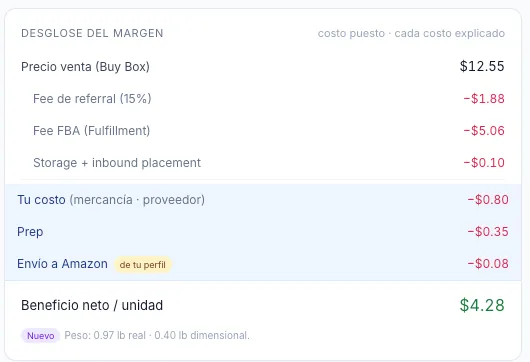
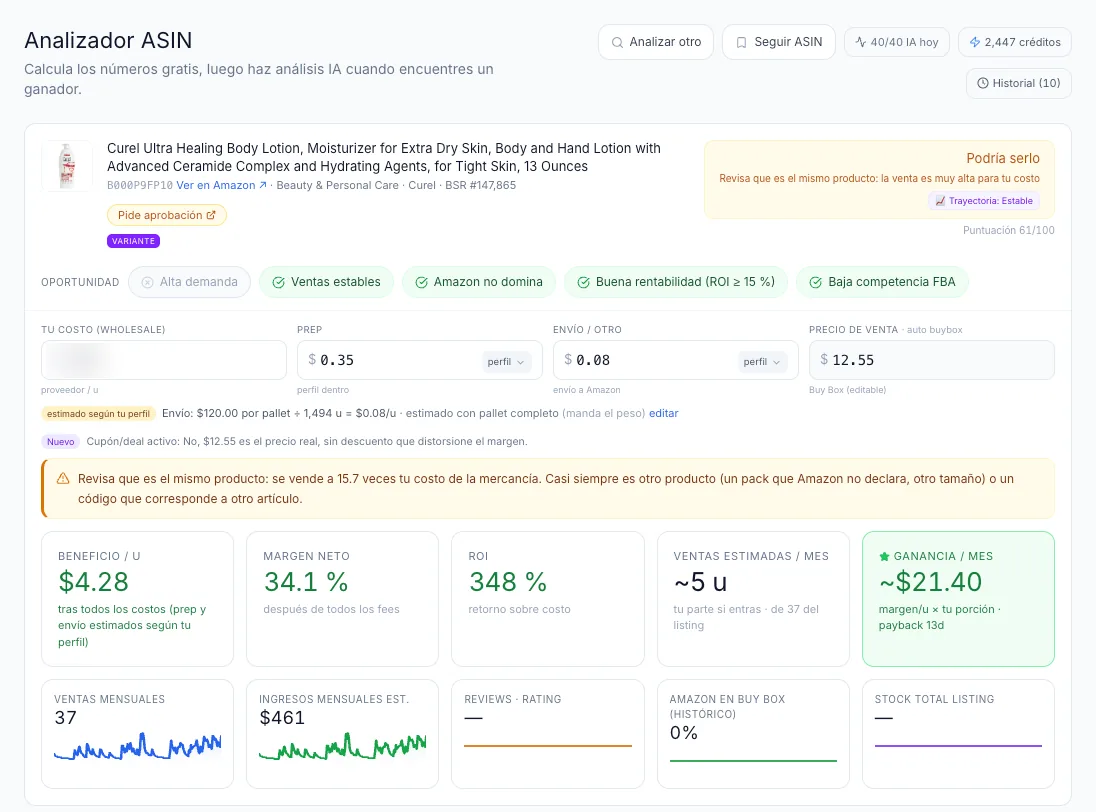
ROI is always calculated on landed cost: goods, inbound freight, prep and shipping to Amazon. The purchase price is shown below as a reference, never as the headline.
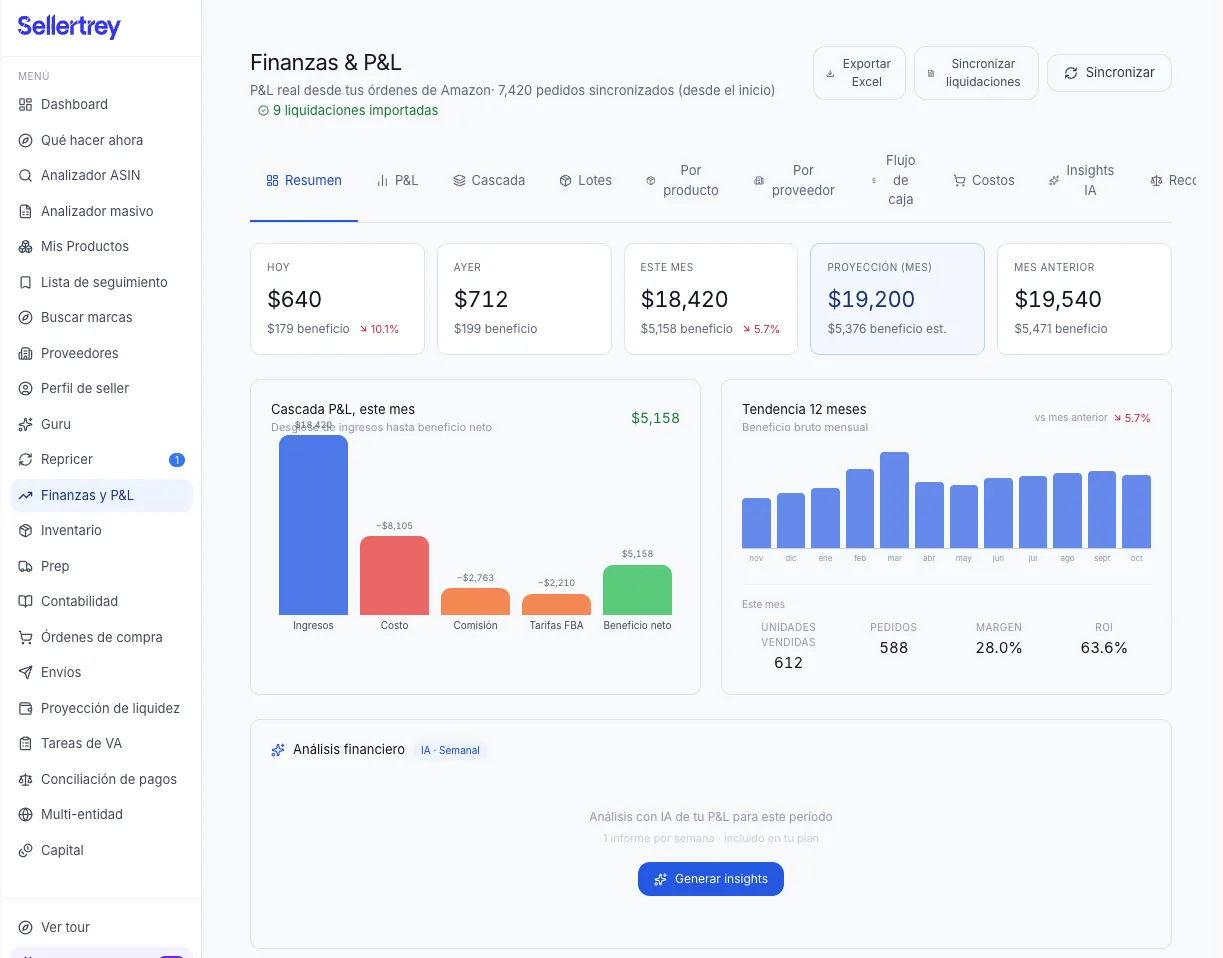
Sellertrey is a SaaS for Amazon FBA wholesale sellers. I own it as founder and design lead: I decide what to build from what sellers tell me and what I lived as a seller, design every flow, and build it with an AI-assisted engineering workflow. The core idea is simple and rare in this market: show the seller the real profit before they buy.
Want to see it from the inside? Sellertrey offers a 7-day free trial.
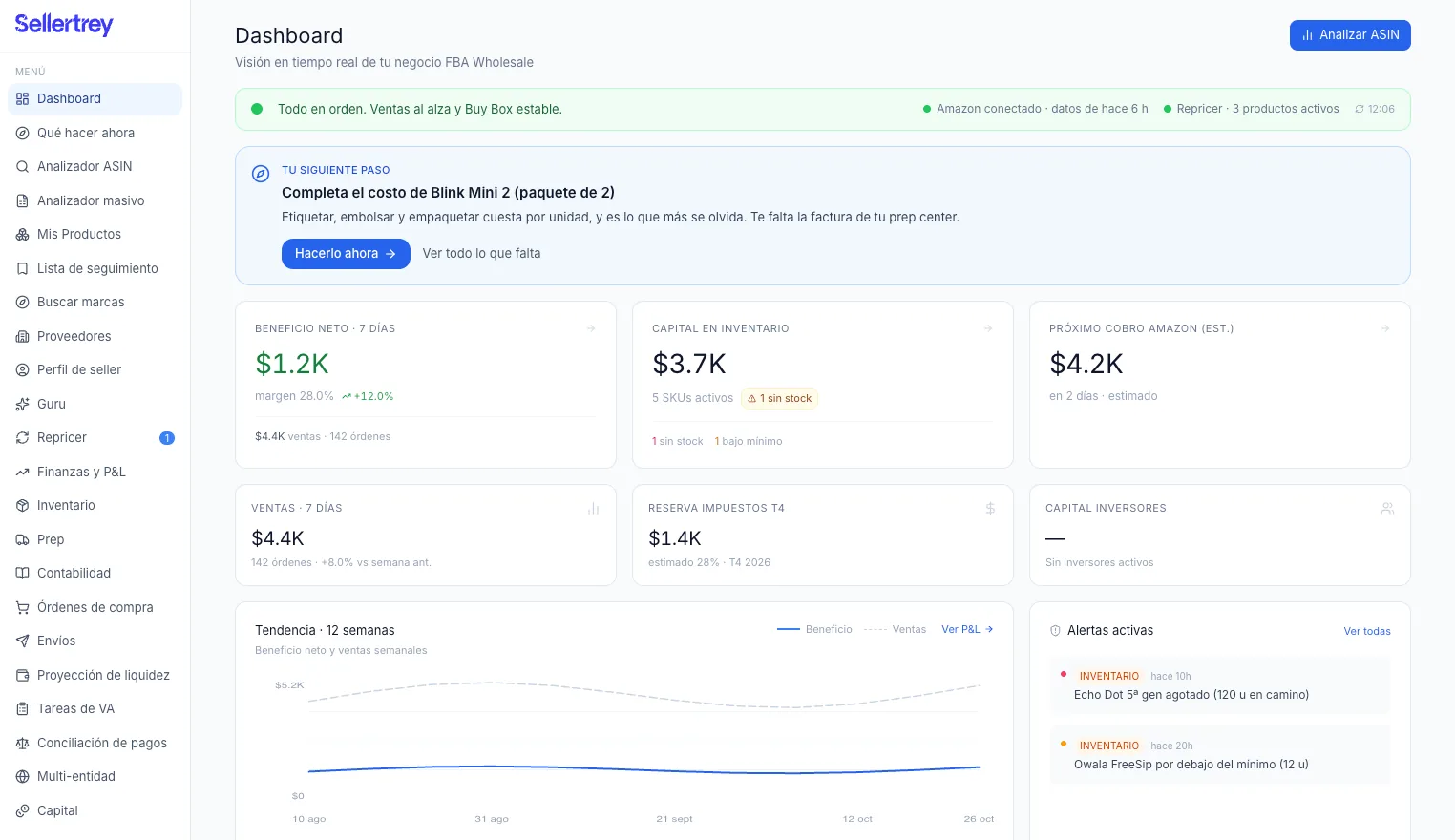
Screens shown in Spanish. Sellertrey is fully bilingual (English and Spanish).
Wholesale sellers buy products from distributors and resell them on Amazon. Every week they receive supplier price lists with hundreds of products and have to decide, fast, which ones are worth buying. Most of them juggle three or four tools that don't talk to each other: one to analyze, one to reprice, one for accounting.
Seller tools calculate return on investment over the purchase price only. They leave out inbound freight, prep and shipping to Amazon, so they overstate profit. When I ran a real supplier list of 636 rows through a market-leading tool, the top results were inflated multipacks and products that were not the one on the list. A seller trusting those numbers loses money on the first order.
ROI is always calculated on landed cost: goods, inbound freight, prep and shipping to Amazon. The purchase price is shown below as a reference, never as the headline.
A product is a winner only if it clears the seller's target ROI on landed cost, has real sales data, the seller is allowed to sell it, and nothing suggests it is a different product. The same rule drives every screen, export and email, so the product never tells two versions of the same story.
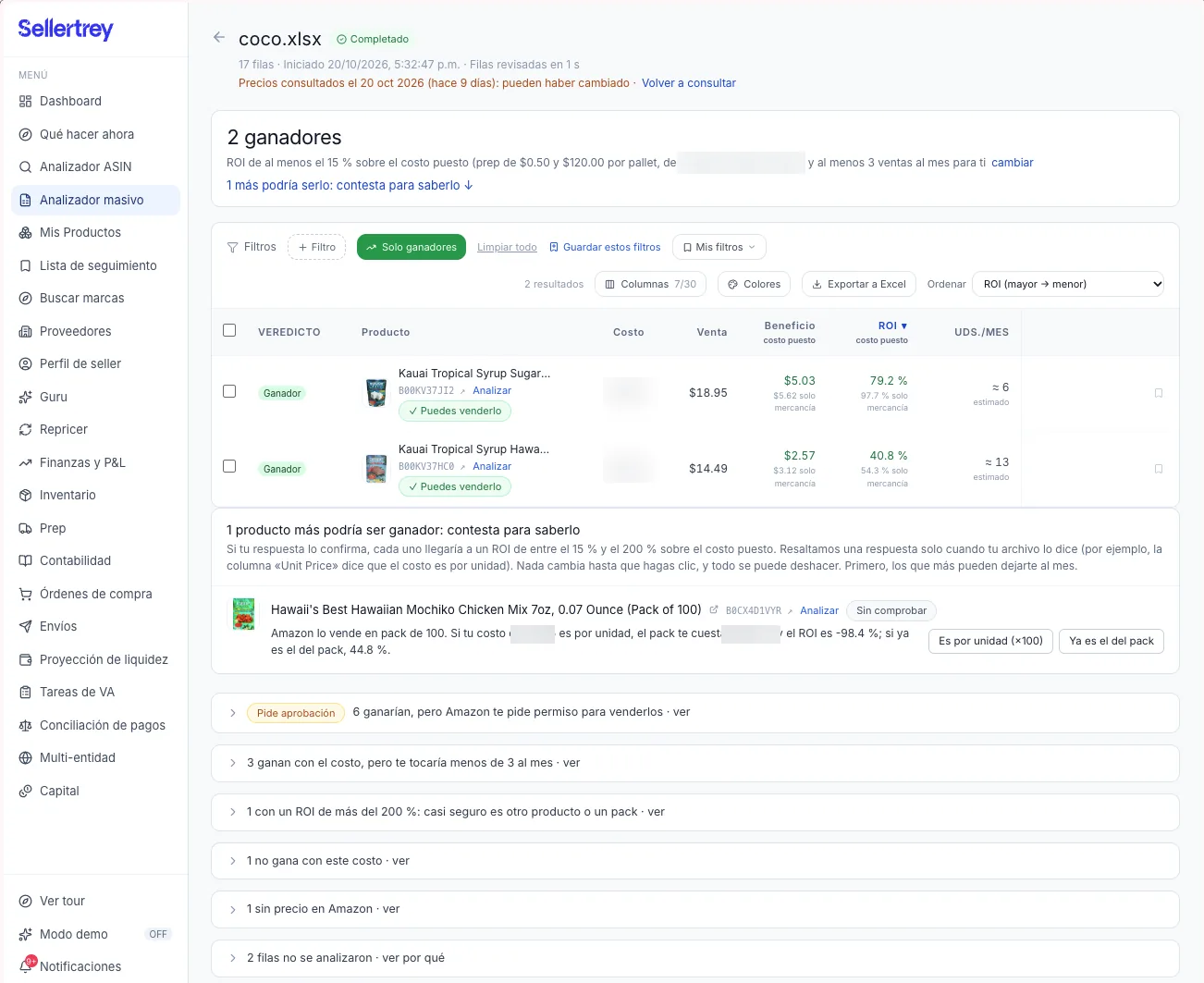
If something hasn't been checked (selling permission, multipack size, number of competing sellers), the product says so and asks, instead of guessing in the seller's favor. “Could be a winner: answer to know” became its own state.


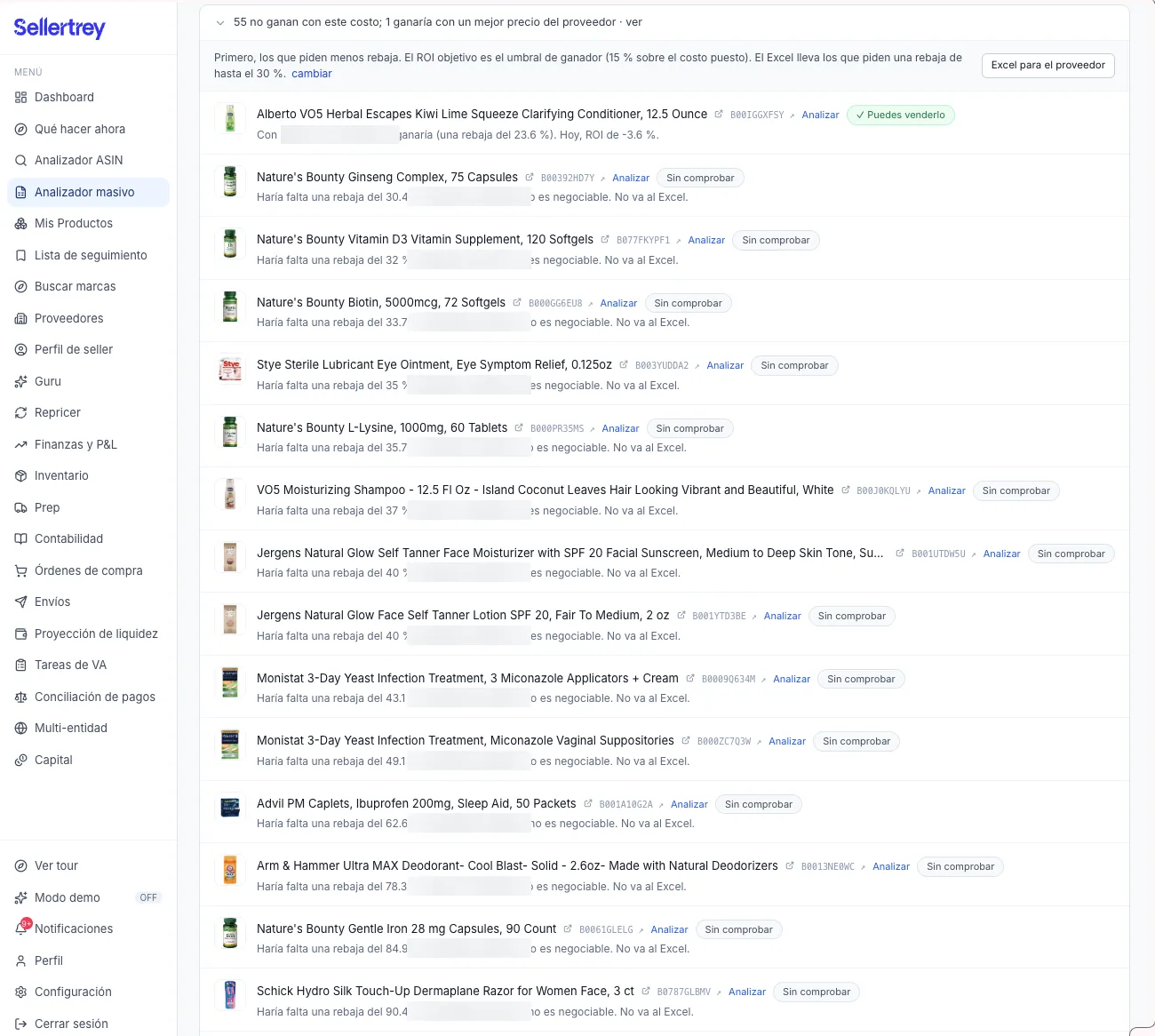
Every row of the supplier file ends in exactly one place, with its reason. In that 636-row list: 256 products not sold on Amazon.com, 149 invalid codes, 7 duplicates and 29 section titles, all explained, none silently dropped.
195 + 256 + 149 + 7 + 29 = 636. Nothing dropped without a reason.
Instead of a long table, a single tray of products that could be winners, ordered by what they could earn per month. The seller answers the open question inline (is this the multipack? can I sell this brand?) and can undo.


For products that don't win at today's price, Sellertrey calculates the price at which they would, and exports a supplier-ready file without margins or internal data.
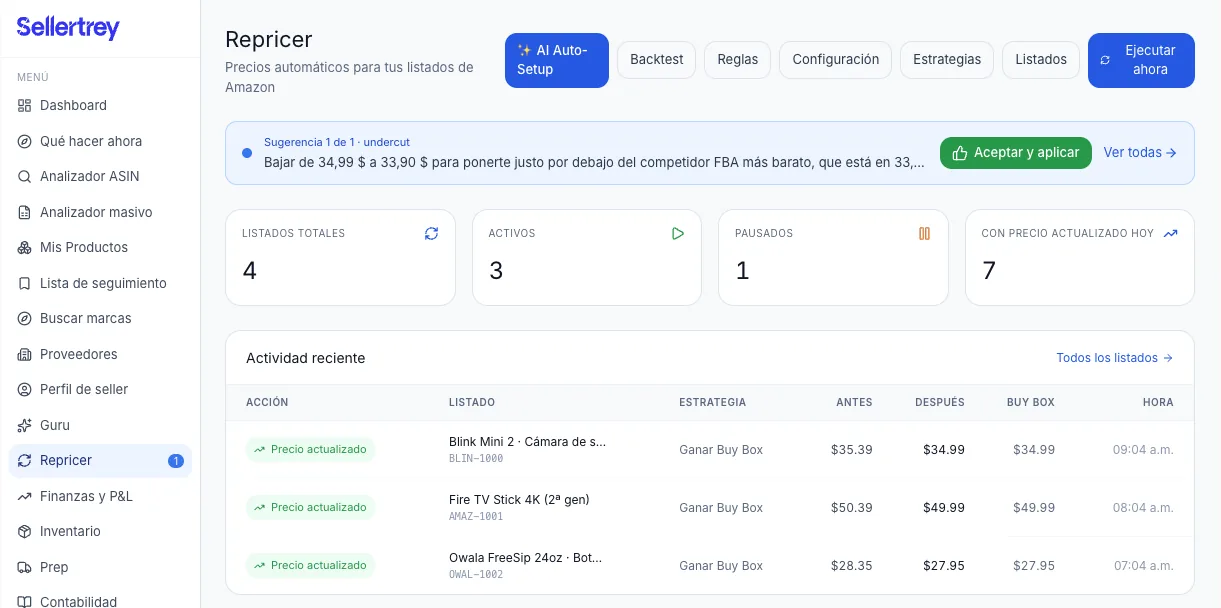
The repricer only moves within the seller's floor and ceiling, caps each change, checks that Amazon actually applied the price, and explains every action in plain words. When it isn't sure, it suggests instead of acting.
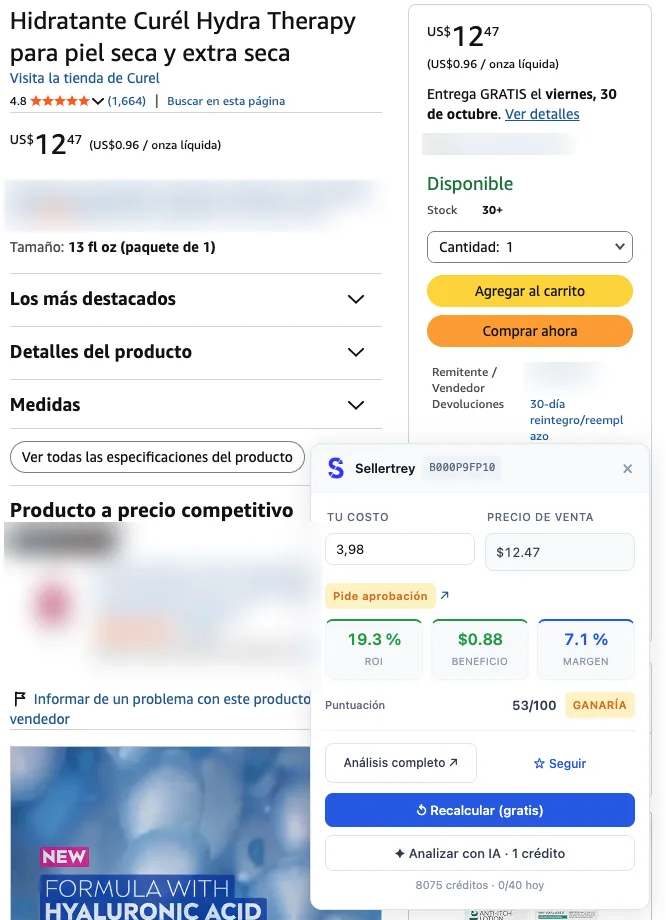
One vocabulary for selling permission across the whole product (green: you can sell it; yellow: Amazon asks for approval, with a direct link; red: restricted; grey: not checked yet). AI opinions are shown in grey and never decide the verdict. No Amazon jargon: “your Amazon account”, not API names.
I work as the product owner and design lead of a very small team: sellers in the private beta tell me what hurts, Claude acts as my strategy partner and engineering team, and I decide, design and review every screen before it ships. Every product decision is logged with its reason, lessons learned are numbered and reused, and design rules such as vocabulary, “unknown is never zero”, one landed cost everywhere and identical numbers in the app and the extension are enforced by automated tests, so the product can't drift from its own principles. Everything goes through staging before production.
In production since July 2026, in private beta with invited sellers. Bilingual (English and Spanish) from day one, with a published Chrome extension that brings the same analysis into Amazon product pages.
While prices load, the product shows no totals at all.
If there is no evidence, nothing gets highlighted.
Designing for “no” builds trust.